












Important now

Check our newest soultions in the scope of property tax, family foundations, R&D tax relief, B2B contracts and many more!  

Check our newest soultions in the scope of property tax, family foundations, R&D tax relief, B2B contracts and many more!  

Premiere of the Made in Poland Report 2024

Premiere of the Made in Poland Report 2024

Poland: A Prime Destination for Businesses Aiming to Contribute to Ukraine’s Recovery

Poland: A Prime Destination for Businesses Aiming to Contribute to Ukraine’s Recovery

ESG at ALTO – Ewa Solarz will head a new business line

ESG at ALTO – Ewa Solarz will head a new business line

ESG at ALTO – Ewa Solarz will head a new business line

Sustainability and ESG, thanks to voluntary actions of companies as well as regulations, have become a permanent fixture in business reality – regardless of the sector and the specifics of the business. We are convinced that sustainability and ESG activities are not just regulations or a passing trend – they are an absolute necessity arising from an elementary responsibility.

That is why ALTO is expanding its offering by establishing a new business line fully dedicated to ESG topics, which will be headed by Ewa Solarz.

Ewa takes on the role of Managing Partner at ALTO and will be responsible for the development and operations of ALTO’s new business line focused on sustainability and ESG consulting. She will lead a team that will implement projects in this area for ALTO’s current and future clients. Ewa is a recognised expert in the field of sustainability and ESG, and prior to joining ALTO, she led a team implementing ESG advisory services in one of the Polish consulting companies. With her expertise, she has advised companies in various industries, including banking, insurance, pharmaceuticals, energy, oil and gas, transport, real estate and food. She has also supported the NGO sector. She has conducted numerous stakeholder dialogues and trainings on sustainability – mainly CSRD/ESRS regulations, responsible consumption, carbon footprint, social economics and others – and for many years also projects related to responsible consumption and social economics within the foundation she has established.

Ewa Solarz ESG w ALTO small photo

Why is ESG important?

The sustainable business development (ESG) pathway is inevitable both due to climate change and the direct impact on our environment and our future, as well as regulations bringing new responsibilities for business with great intensity.

The strong interest of investors, regulators and financial institutions in ESG issues is changing entrepreneurial realities. It is shifting the focus from purely economic issues to those related to sustainability – particularly concerning the environment and climate, but also corporate governance and social impact with a strong focus on human rights throughout value chains.

ESG advisory services

As part of our ESG consultancy at ALTO, we will support clients with, among other things, CSRD-compliant double materiality analysis, the development of sustainability statements (also resulting from SFDR requirements), the creation of ESG strategies, carbon footprint calculations and the development of SBTi-compliant decarbonisation strategies, as well as ongoing ESG support (in the form of outsourcing). We aim at creating value for our clients and making a lasting positive impact on the organisation internally and in its environment.

I am very much looking forward to developing ALTO together. I hope that by combining ALTO’s organisational culture, its experience in cross-industry advisory with my expertise in sustainability and the drive to develop sustainable solutions for clients, we will have the opportunity to deliver top-quality services to a wide range of clients. I see great value and potential in the possibility to support the business in so-called cross projects, especially in the context of ESG, as well as the recently established Risk Advisory business line” – says Ewa Solarz, Managing Partner, ESG at ALTO.

„We are currently observing an immense interest from companies for support on sustainability topics. Many of them are already advanced in their ESG efforts. Even more are or will be taking their first steps in this area. Most will need advisory support – from initial reporting readiness analyses through strategies, decarbonisation activities, reporting in line with CSRD and other guidelines, etc. Regardless of the extent of support, our priority remains to deliver the highest quality service. At the same time, we at ALTO believe very strongly that we all need to take responsibility for the future – the future of our immediate environment as well as the one further afield – in both societal and environmental contexts. We are convinced that the corporate leaders should also be leaders of action in this key area. I am delighted that the ALTO team is ready to support them in achieving this” – adds Kamil Lewandowski, Chief Growth Oficer at ALTO.




Martyna Langa joins the TP team at ALTO

The growing demand for transfer pricing services requires constant strengthening of the team as well. That is why Martyna Langa, holding extensive experience in the implementation of projects for major international and Polish capital groups, has joined the TP practice at ALTO as a Manager. On a daily basis, she particularly supports clients from industries such as FMCG, healthcare and wellness, as well as energy and real estate.

Martyna’s joining is an element of ALTO’s long-term strategy and an expression of continuous improvement and development of internal competencies. We are convinced that her knowledge and experience in the field of transfer pricing will contribute to strengthening our position on the market and enable us to even better support our clients in complex issues.

We are pleased to welcome a new member of the transfer pricing expert team. The constant expansion of internal competencies allows us to offer increasingly comprehensive and innovative solutions, which is crucial in a dynamically changing business environment.

Martyna has an extensive experience in a wide range of international and non-standard projects, which fits our needs perfectly. Personally, Martyna’s joining to the TP team at ALTO is the best upward feedback and expression of trust for me, as we have already had the opportunity to work together for many years in another organization, achieving numerous successes” – comments  Aneta Grzyb, tax advisor and attorney-at-law, a leader of the Transfer Pricing team.

„Joining ALTO is a significant step for me in the development of my career in transfer pricing, which I have been working with since 2017. Both the company’s values and its development strategy are consistent with my understanding of the target workplace and were important to me from the perspective of making the decision to join ALTO. I especially appreciate that the team consists of really specialized experts from whom one can learn a lot, as well as experienced leaders. I believe that it is only by forming a properly aligned team that one can provide the highest quality services to clients. I have no doubt that this will be the case at ALTO, especially since Aneta and I have completed more than one project together in the past” – comments on her joining Martyna Langa, Manager in the TP team at ALTO.


martyna langa


Martyna has carried out numerous compliance projects over the course of her career – including preparation of benchmarking and transfer pricing analyses – restructuring, negotiation of prior pricing agreements (single and bilateral), as well as transfer pricing tax audits. She also participated in projects on auditing transfer pricing policies, as well as designing inter-group settlements.

She has been working in taxation since 2016, when she started her career at one of Warsaw’s tax law firms, and since 2017 she has been gaining experience in one of the so-called “Big Four” firms. Martyna graduated from “Quantitative Methods in Economics and Information Systems” at the Warsaw School of Economics and “Economics and Management” at NEOMA Business School.

Event ALTO Wine & Tax – talks about taxes over a wine!

Is it possible to talk about taxes in a relaxed atmosphere, tasting the finest selections of wines at the same time? Of course! But only at ALTO…

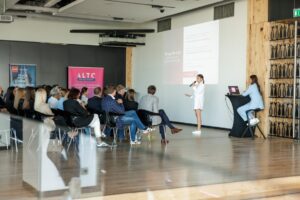
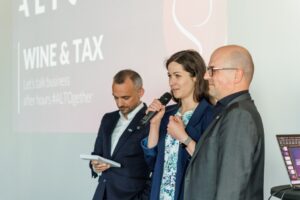
On one of the warm spring evenings, May 15th, 2024 to be exact, we had the pleasure of hosting our clients, business partners and friends at a unique event ALTO: Wine & Tax. Let’s talk business after hours ALTOgether at Concept 13 restaurant in the center of Warsaw. It was organized under the substantive patronage of ACCA Poland and the media patronage of Focus on Business.

During the first part of the event, a number of experts from ALTO, in a light-hearted format, discussed the hottest topics related to KSeF, JPK CIT reporting, minimal tax, withholding tax, tax credits, transfer pricing, real estate tax and changes in PIT and Social Security for executives, among others. Paweł Stasiaczyk from PROTECTO Brokers also joined the speakers’ panel, and Arkadiusz Lewandowski from Altera presented a technological solution to support corporate finances. The entire panel was moderated by Wiktor Doktór from ProProgressio and Aleksandra Bońkowska from ALTO.

The networking part, accompanied by a delicious buffet and a selection of fine wines, provided our guests with an opportunity to make new contacts and strengthen existing relationships. We were also entertained by live music performed by the jazz band The Spell, which made our event special yet again. Unofficial conversations lingered late into the night, covering a wide range of topics besides taxes.

We extend our heartfelt gratitude to all participants for your gracious presence and active engagement, which made this evening a resounding success! We hope to see you again soon.

Now let’s experience it again…


Premiere of the Made in Poland Report 2024

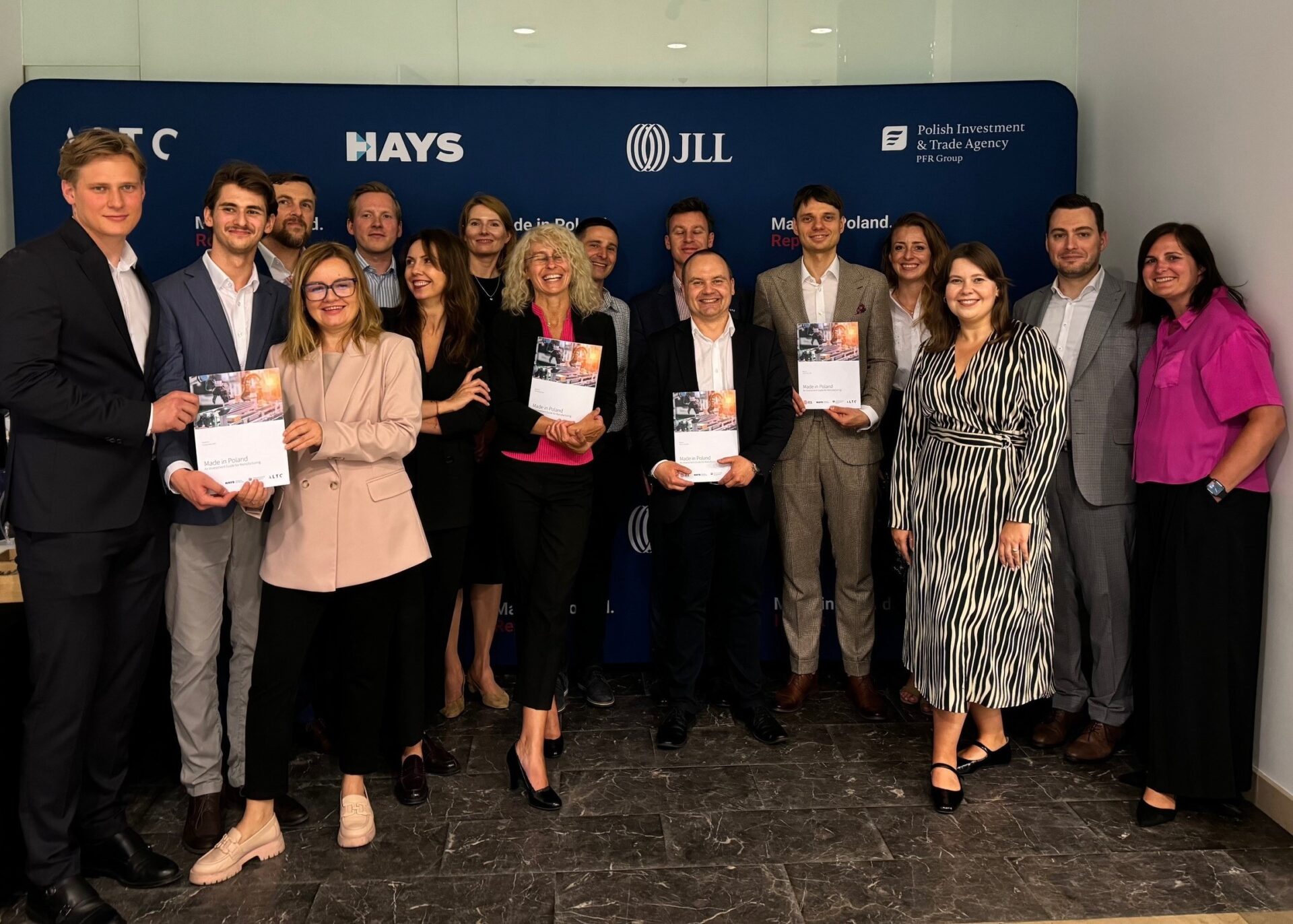
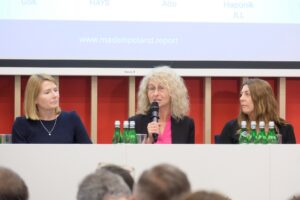
Poland is a key market for the development of the manufacturing industry, which is why once again, in cooperation with JLL, Hays and the Polish Investment and Trade Agency (PAIH), ALTO co-authored the report Made in Poland.


The Made in Poland report focuses on the industrial manufacturing sector.

Aspects of the business environment, labor market, legal and tax regulations were analyzed. In addition, grant opportunities and the benefits of public support programs were discussed. Trends in the real estate market were also presented, along with diversified acquisition and rental options.

The Made in Poland report describes the business benefits of Poland’s strategic geographic location in Europe. As a key node of the European transport network, Poland is steadily improving its roads and railroads, enabling connections to most European capitals. It is worth noting that in 2023, the combined throughput of Europe’s fifteen largest container ports reached 79.7 million TEUs (from January to September), with the port of Gdańsk accounting for 3% of this result. Poland also has the opportunity to benefit from the “New Silk Road” initiative, which connects Europe to China via a rail network, creating an opportunity to strengthen its role as a key distribution center for manufacturers from China and other Asian countries.


What kind of support investors can count on in Poland?

In 2023, Poland reached its highest-ever level of foreign investment, of which EUR 7.4 billion came from investments carried out with the professional support of the Polish Investment and Trade Agency.

Manufacturers investing in Poland have access to various forms of financial support from both domestic and European Union funds. These opportunities include attractive government grants and financing for low-carbon projects, EU co-financed programs, as well as tax breaks and exemptions dedicated to specific sectors.

Poland’s “Constitution for Business,” the regulations governing the management of businesses, creates a favorable environment for businessmen. The recent focus has been on compliance with EU law, digitization of legal acts and judicial processes. In addition, significant progress has been made in the area of e-administration. Poland’s tax system is being developed based on international standards, including OECD guidelines, and is characterized by dynamic digitization and standardized reporting, such as e-invoicing and SAF-T reporting. In addition, local tax law offers various incentives for innovators, and Poland has become one of the world leaders in the effective use of R&D tax credits.


In recent years the government has had a great focus on digitalization and automation of tax compliance. This obviously brings some challenges for companies, but also gives more efficiency and value to their business in the long run” says Tobiasz Dolny, Partner & Tax Advisor, ALTO.


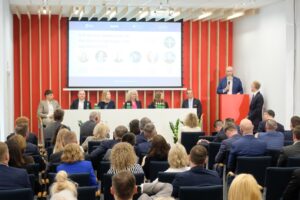
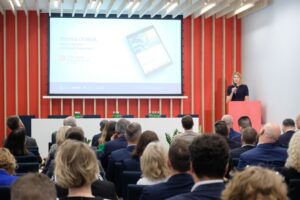
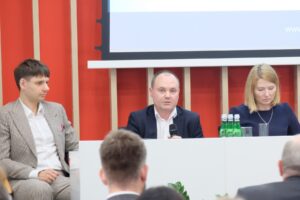
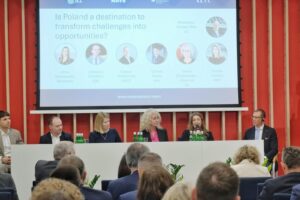
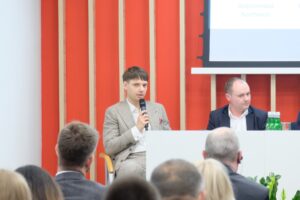
The premiere of the report took place on May 23rd, 2024 at the Press Center of the Polish Investment and Trade Agency. For those absent or willing to experience it again, we are publishing the recording below.

You can download the report here madeinpoland.report


Risk Advisory – ALTO with new Partner and new service line

The ALTO team is dedicated to continuously delivering greater value to our customers and ensuring that our services remain highly relevant in response to evolving business realities. To achieve this, we focus on both strengthening our existing competencies and building new ones.

As part of our strategy adopted in 2023, we are consequently expanding our range of services by establishing a new service line within ALTO – Risk Advisory. It will be led by Marcin Domagała, PhD.

doktor Marcin Domagała risk advisory ALTO sesja biznesowa

Marcin Domagała is an experienced leader whose existing career has transitioned from the academic world to the business sector. From looping quantum gravity models and educating students, to modeling financial and insurance risks in financial institutions. His expertise is well-demonstrated in a number of completed projects related to Solvency II, IFRS 17, quantitative modeling of the impact of ESG risks on corporate finance, and mathematical modeling of financial risks including interest rate, credit, operational and inflation risks.

He is also professionally associated with the areas of data science and AI and is one of the few experts in quantum computing, both in its positive applications and the emerging quantum risks related to data security.

The team led by Marcin will support ALTO’s clients by providing technological tools and analyses to identify, measure and manage risk effectively. We will focus on building solutions tailored to industries and companies’ specific reporting standards – no matter how specific they might be.

„Risk Advisory is not only about new and unique competencies that will allow us to better support ALTO’s clients. The team led by Marcin also embodies our forward-thinking approach, paying close attention to the exponentially growing importance of technological solutions in business. This new venture, aligned with the strategy adopted last year, represents a crucial step in ALTO’s development. Last but not least, I can promise that this is not the end of new developments for ALTO – we will be announcing the opening of another service line in the coming weeks” – says Kamil Lewandowski, Chief Growth Officer at ALTO.
A basic law of economics states that profit is a bonus for risk. Therefore, risk is present in all types of business. Success largely depends on the ability to identify, measure, and take appropriate mitigating measures. At Risk Advisory, we will assist our clients in modeling risk and ensuring compliance with all regulations. Analyzing client data enriched with external sources (3rd party data) will help better understand the sources of risk and spot potential opportunities. With our competence and experience, we will help companies and organizations adapt to the dynamically changing business environment” – comments Marcin Domagała, PhD, Managing Partner at Risk Advisory, ALTO.

[EVENT] WINE & TAX. Let’s talk business after hours ALTOgether

Let’s talk business after hours #ALTOgether

  • Will you grow old before KSeF comes into force?
  • You are a decision-maker? How to avoid fear of personal responsibility.
  • Do you know what reliefs and tax savings should your company be benefiting from?
  • Do you want to tame the chaos of PIT and ZUS changes and learn what already is certain, and what is only possible?


On the 15th of May, you will acquire valuable insights into immediate planning considerations and actions that may be deferred. Join us for a special event at Concept 13 restaurant (DH Vitkac), right in the heart of the city. Amidst a delightful buffet and fine wine selection, we shall marvel at the Warsaw skyline while reflecting upon key tax matters. There will also be a possibility of exploring avenues for business development. Experience live music while discussing most vital tax topics!

Among the speakers leading the substantive part of the programme there will be a number of ALTO experts: Aleksandra Bońkowska, Tobiasz Dolny, Aneta Grzyb, Rafał Tołwiński, Żaneta Chojnacka and Daniel Banach, who also is a member of an international organisation ACCA, as well as Paweł Stasiaczyk from PROTECTO Brokers. During the event, other ALTO specialists will also be present.

The event will start with the substantive part at 15.00.

After it finishes at around 17:00, we will move seamlessly into the cocktail-networking section.


See you there!

ALTO Team


RSVP

The meeting is dedicated to executives, financial directors, human resources and legal directors. Participation is free of charge and the number of places is limited. Please register your wish to participate by 7 May at: rsvp@altoadvisory.pl


The event will held under the auspices of the association ACCA Polska, with media patronage of Focus on Business.


[ALERT ALTO]: Latest updates of the National e-Invoicing System (KSeF) are available on the Ministry of Finance website, along with FAQs.

We would like to inform you that the website of the Ministry of Finance has published a section of questions and answers concerning the National e-Invoice System (KSeF).

In the individual categories, you will find answers to questions in areas concerning KSeF such as authorisations, structure (construction), transmission, invoice issuance, technical issues and others.

In particular:

  • The Ministry assures that it will announce the KSeF effective date in May after the results of the system performance audit.
  • The implementation of the conclusions of the ongoing audit should remain neutral to the parameters of the KSeF tools.
  • The KSeF will come into force before the EU provisions of the VIDA package are implemented and the KSeF itself is expected to be compliant with VIDA.
  • The Ministry does not envisage modifying the FA(2) schemaFA(2) schema will remain the same.
  • The rule that a structured invoice is deemed to have been issued on the date it is sent to KSeF will remain in place.
  • There will be no changes to the entitlement of the internal establishment.
  • The Ministry of Finance is open to discussions with entrepreneurs on the inclusion of B2C invoices in KSeF.
  • There are no plans to remove the obligation to indicate the KSeF ID for payments.
  • The Ministry is not planning to extend the deadline for issuing invoices during emergency mode.
  • A compendium of knowledge on the National e-Invoicing System is being prepared.
  • Training sessions on the free KSeF Internet application will be held in each tax office.
  • The Ministry promises to clarify the issue of a fixed establishment (FE).
  • The Ministry does not rule out the introduction of KSeF in stages.

We will keep you informed of any new key information on the progress and timetable of the legislative work related to the KSeF area.

If you need more information on the KSeF, the recommended preparations and adjustments, or the possibility of support from ALTO – please feel free to contact our experts.

Mobile workers – important and favorable reasonings of courts and tax authorities

Accommodation costs during business assignments

On January 9th this year, the Supreme Administrative Court (NSA) once again affirmed the previously presented stance, stating that providing accommodation to an assigned employee by the employer does not generate income on the employee’s side that would be subject to personal income tax (PIT).

In the analyzed case, the company offered its specialized services in the renovation and maintenance of production lines abroad, mainly within the European Union. This involved numerous travels by employees to locations far from their places of residence by several hundred or even several thousand kilometers. Consequently, the employer either provided free accommodation or covered the costs associated with their accommodation at a location and under conditions chosen by the company.

The dispute between the company and the Director of the National Fiscal Information and the Administrative Court primarily arose from whether providing employees with free accommodation related to assignments constitutes income taxable under personal income tax.

The Supreme Administrative Court’s ruling in favour of the company resulted from its filing of a cassation complaint against a previous judgment of the Administrative Court in Cracow, which agreed with the stance of the Director of the National Fiscal Information, asserting that providing accommodation to an employee is in their interest and, therefore, generates income on their side. Consequently, the employer is obliged to include it in the calculation of advance payment for personal income tax.

The NSA disagreed with this position and, drawing on guidelines established by the Constitutional Tribunal regarding non-remunerated benefits, concluded that providing accommodation to employees during assignments is in the employer’s interest. The employer gains a benefit in the form of contract fulfillment, which would not be possible without the assigned employees.

Equally important was the NSA’s reference to European law. The directive concerning the posting of workers to provide services specifies that reimbursements for expenses such as travel, meals, and accommodation are not included in the remuneration of these workers.

The position presented by the NSA is another, following similar judgments in August 2023, confirming that a consistent judicial line is being established on this matter.


Business travel of remote workers

In the case of another group of employees primarily working remotely, it is worth examining a recent individual interpretation issued by the Director of the National Fiscal Information. It was stated that the travel of such an employee to the office, if requested by the employer, should be considered as a business trip.

In the analyzed case, the limited liability company operated in the IT industry and employed workers residing in various regions of Poland who performed their duties remotely. The place of work specified in the contract was the province where the respective employee lived. Their presence in the office was sometimes necessary for the performance of their duties, and the company wanted to confirm its reasoning that, in such cases, it constitutes a business trip for these employees. The tax authorities had no objections.

A positive consequence for employers and employees of recognizing such a journey as a business trip is the possibility of exempting the costs of such travel from PIT based on Article 21(1), point 16, letter a) of the Personal Income Tax Act.

When availing of these exemptions, interested parties should, however, be mindful of the limits set by the Minister of Labor’s regulation of January 29, 2013 (i.e., Journal of Laws from 2023, item 2190).

Do these issues concern your organization? Do you need assistance in regulating remote work or in settling accounts for mobile employees? If so – do not hesitate to contact us!


[ALERT ALTO]: URGENT! Mandatory e-invoicing (KSeF) implementation in Poland postponed

We would like to inform you that on January 19, the Ministry of Finance announced the postponement of the mandatory implementation of e-invoicing (KSeF) in Poland.

The new effective date of KSeF will be communicated after an audit of the existing work is conducted. From the information provided, it appears that the mandatory implementation of KSeF in Poland will not take place before 2025.

For entrepreneurs who have not yet addressed this matter, there is now additional time to adapt their organizations to the upcoming obligations. It is crucial to remember that this will be a time-consuming process, indicating that delaying the initiation until the last moment is not advisable.

We will keep you informed regularly about any new key information regarding the progress and schedule of legislative activities related to the KSeF area.

If you require further information about KSeF, recommended preparations and adjustments, or the possibility of support from ALTO, we encourage you to get in touch with our experts.

[ALTO ALERT] Movement of own goods belonging to one company – invoicing in KSeF

The term ‘non-transactional Intra-Community Supply (ICS)’ refers to the movement of own goods from an EU country to the territory of another EU country.

In business practice, non-transactional ICS is usually documented not with an invoice, but with an internal document. In this case, the tax obligation takes place on the 15th day of the month following the month in which the supply took place, or on the date of issuance of a document that is not an invoice but has all the elements of an invoice.

As of July 1, 2024, the mandatory National e-Invoice System (“KSeF”) comes into effect, i.e. the need to issue invoices in structured form using the said system. The premise of the KSeF program was its neutrality for the taxpayer, with the ultimate goal of minimal interference with workflow processes and not changing the invoicing rules in the existing law. This assumption was illusory from the beginning in the context of implementing KSeF in an organization, and new tax ruling on KSeF confirms the unfavorable broad obligation to issue structured invoices over and above the existing business practice in the context of moving own goods.

In a tax ruling dated December 21, 2023, ref. 0114-KDIP1-2.4012.484.2023.2.GK, the Director of the National Revenue Administration Information Center held that the movement of own goods is a type of intra-Community supply of goods and is subject to the obligation to invoice, and therefore to invoice in the KSeF system.

As indicated in the ruling: a special case of intra-Community supply of goods is the movement of the taxpayer’s own goods from the country to a member state other than Poland.

This ruling is a part of a certain line of tax authorities’ jurisprudence. However, in practice, issuing an invoice in connection with a non-transactional ICS does not happen often, and this issue is still the subject of controversy.

The director of the National Revenue Administration Information Center took the position that in case of having a fixed establishment in another country, there are two separate taxpayers, therefore invoices should be issued. And so, on the grounds of KSeF regulations, invoices should be issued with the use of this system.

Therefore, as of July 1, 2024, along with the entry into force of KSeF, we encourage you to review your transactions for the presence of non-transactional ICS. And, if you conduct such movements, to adapt your invoicing process to the requirements of KSeF.

Adjusting to KSeF requirements is not that easy, therefore we encourage you to take advantage of our tax consulting services.